

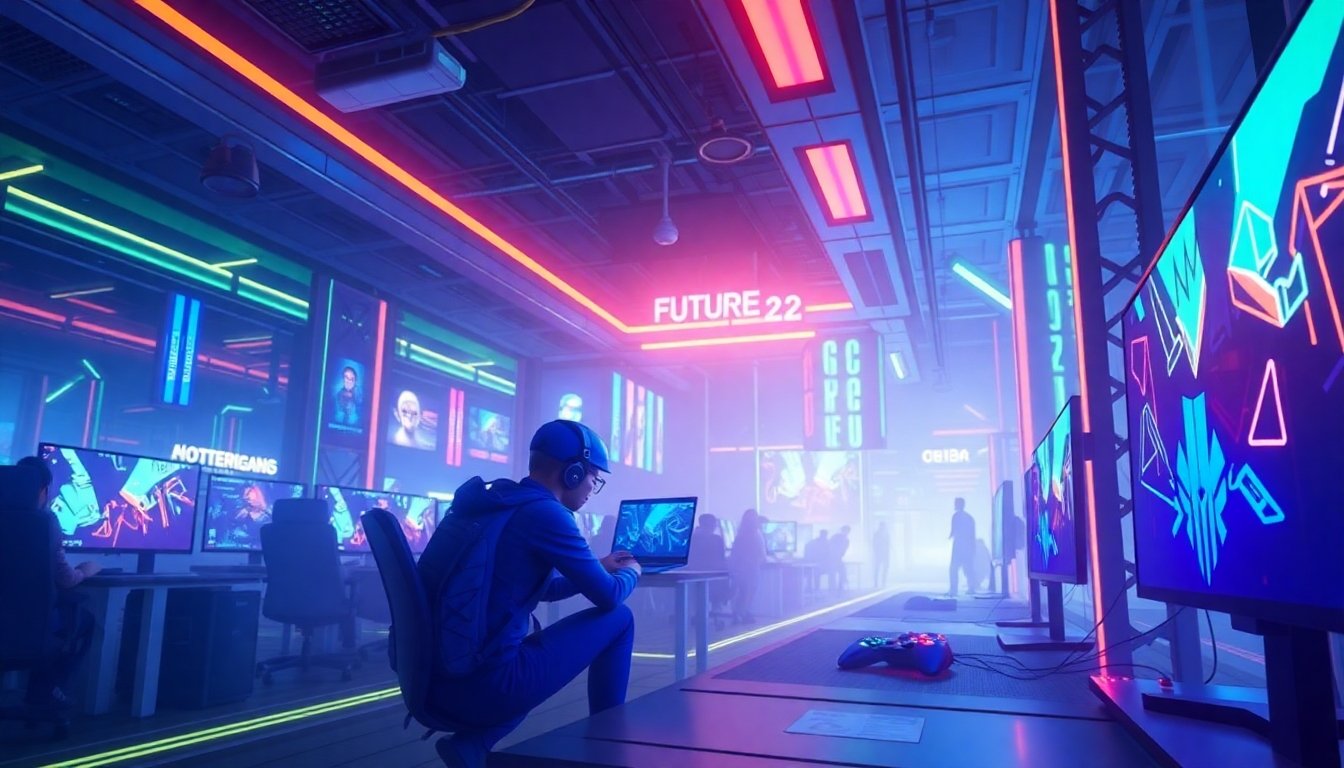
The gaming industry is on the brink of a revolution driven by artificial intelligence that creates fully adaptive, personalized virtual worlds. By 2035, AI-generated games will not only respond to player choices but also anticipate emotions, play style, and cognitive patterns, delivering unique experiences for every gamer. This shift will transform storytelling, game design, player engagement, and the very definition of interactive entertainment.
Understanding AI-Generated Gaming Worlds
What Are AI-Generated Worlds?
AI-generated worlds are dynamic virtual environments created and modified in real-time by artificial intelligence algorithms. Unlike traditional games with fixed maps, quests, or storylines, these worlds evolve according to player actions, decisions, and even psychological states.
How AI Learns Player Behavior
AI monitors player choices, reaction times, decision patterns, and engagement levels to adapt the game. Using deep learning, reinforcement learning, and behavioral analytics, AI predicts what players will enjoy, tailoring challenges, rewards, and narratives to maintain immersion and excitement.
Core Technologies Behind Mind-Adaptive Gaming
Procedural Content Generation
AI algorithms generate landscapes, characters, quests, and objects dynamically rather than relying on pre-made assets. This ensures no two playthroughs are identical.
Neurofeedback and Biometrics
Future gaming devices may track brainwaves, heart rate, pupil dilation, and other biometric signals to assess player emotions, stress, and excitement, allowing AI to adjust difficulty, pacing, and storylines in real-time.
Generative Storytelling
AI creates complex branching narratives, dynamically modifying dialogues, plot twists, and character behavior based on player choices and emotional states. This enables games with endless replay value and personalized storytelling.
How AI Will Transform Gameplay
Personalized Challenges and Rewards
Players will face challenges that match their skill levels, providing optimal engagement without frustration or boredom. AI ensures rewards are meaningful, increasing motivation and satisfaction.
Dynamic World Evolution
Virtual worlds will respond to player behavior by evolving environments, politics, economies, and social structures. Cities may flourish or decay, factions rise or fall, and entire ecosystems shift based on user interactions.
Immersive NPCs and Social Interaction
Non-playable characters will develop realistic personalities, memory, and emotions. Players can form relationships, alliances, or rivalries that evolve naturally over time, creating a socially rich gaming experience.
Impact on Game Development
Reduced Development Time
AI-generated assets and narratives reduce the need for manual design, allowing smaller studios to create expansive, AAA-quality games.
Infinite Replayability
Games will offer virtually endless experiences as AI continually generates new content, missions, and storylines for each player.
Cross-Platform Adaptability
AI-generated worlds can automatically adjust for VR, AR, console, PC, or mobile, providing seamless experiences across devices.
Potential Benefits to Players
Hyper-Personalization
Each player receives a unique, tailored experience that aligns with their interests, emotions, and play style.
Increased Engagement and Retention
Adaptive worlds maintain challenge, novelty, and excitement, keeping players engaged longer than traditional static games.
Emotional and Cognitive Growth
Games may help players develop problem-solving, decision-making, and emotional intelligence by adapting to their cognitive and emotional patterns.
Challenges and Considerations
Privacy and Data Security
AI systems will collect sensitive biometric and behavioral data, raising privacy concerns and the need for secure handling.
Ethical Implications
Overly immersive or emotionally manipulative games may impact mental health, addiction risk, or social behavior. Developers must balance engagement with responsibility.
Technical and Computational Demands
Real-time AI generation requires high computational power, advanced GPUs, and optimized algorithms to ensure smooth gameplay.
The Future of Multiplayer and Social Gaming
AI-generated worlds will also reshape multiplayer experiences. Player-driven economies, evolving communities, and AI moderators will create richer, more adaptive social environments. Virtual esports could feature dynamic tournaments where AI adjusts challenges to match team skill levels, enhancing competition and fairness.
Conclusion
By 2035, AI-generated worlds will redefine the gaming landscape, offering hyper-personalized, mind-adaptive experiences that evolve continuously with the player. This technology will transform storytelling, game design, and social interaction, creating games that are never the same twice and respond directly to player psychology. While challenges in privacy, ethics, and computation remain, the future of gaming promises unprecedented immersion, creativity, and emotional connection, making interactive entertainment more intelligent, responsive, and human-centered than ever before.