

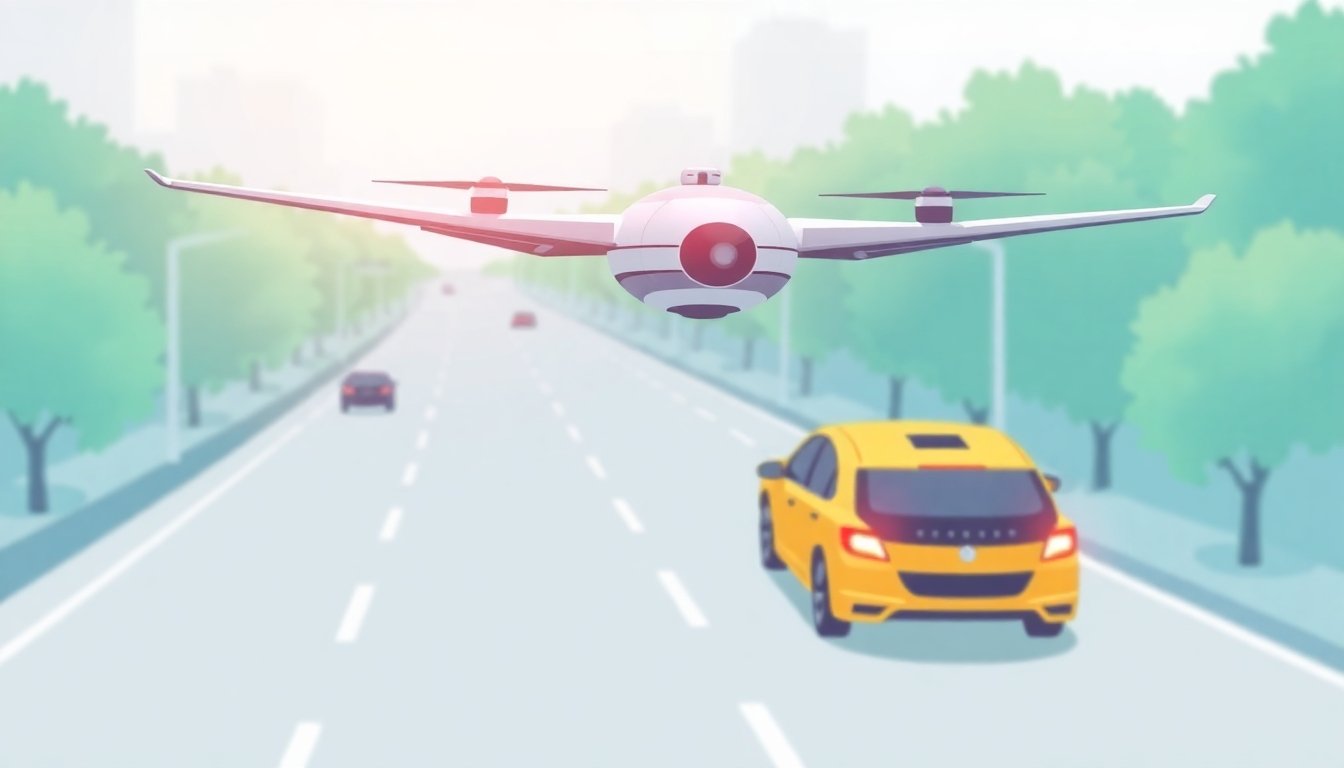
By 2040, transportation will be transformed by autonomous vehicles, AI-integrated infrastructure, and quantum-powered traffic management systems. Cities and regions will experience faster, safer, and more efficient travel through innovations such as air taxis, smart roads, and predictive traffic optimization. The convergence of artificial intelligence and quantum computing will redefine mobility, reduce congestion, lower emissions, and enhance urban living, creating a seamless transportation ecosystem where human drivers play a minimal role.
Autonomous Air Taxis
Urban Air Mobility
AI-powered air taxis will provide on-demand aerial transportation, connecting urban centers, suburbs, and airports efficiently. These autonomous vehicles will reduce reliance on traditional road traffic and enable rapid commuting across crowded cities.
AI Navigation and Safety
Machine learning algorithms will optimize flight paths, avoid obstacles, and manage emergency scenarios in real-time. AI will continuously monitor airspace conditions, weather patterns, and traffic to ensure passenger safety.
Infrastructure for Air Taxis
Vertiports, automated charging stations, and AI-controlled landing zones will facilitate smooth operations. Drones and AI sensors will assist in maintenance, inspection, and logistics for urban air mobility networks.
AI Roads and Intelligent Infrastructure
Smart Roads
Roads embedded with AI sensors and IoT devices will monitor traffic, environmental conditions, and vehicle behavior. These smart surfaces will communicate directly with autonomous vehicles, dynamically adjusting speed limits, lane usage, and hazard alerts.
Adaptive Traffic Signals
AI-controlled traffic lights will optimize flow based on real-time conditions, minimizing congestion and reducing travel times. Predictive models will anticipate traffic surges, accidents, or road closures to reroute vehicles efficiently.
Vehicle-to-Infrastructure Communication
Autonomous vehicles will interact with AI-integrated infrastructure to exchange data about speed, positioning, and road conditions, creating a fully connected transportation ecosystem.
Quantum Traffic Systems
Quantum Computing for Traffic Optimization
Quantum algorithms will process enormous amounts of traffic data to optimize routing across entire cities or regions in real-time, balancing demand and reducing bottlenecks.
Predictive Congestion Management
By analyzing historical and live traffic data, quantum systems will predict congestion points, reroute vehicles proactively, and manage fleet distribution for public transport and autonomous taxis.
Integration with AI and IoT
Quantum traffic systems will work alongside AI-powered vehicles and smart infrastructure to create a unified network that self-regulates, reduces accidents, and maximizes efficiency.
Benefits of Advanced Transportation Systems
Reduced Travel Time
Autonomous vehicles, AI roads, and optimized traffic flow will significantly decrease commuting and delivery times.
Enhanced Safety
AI and quantum-powered monitoring systems will prevent accidents, predict hazards, and manage emergency responses in real-time.
Environmental Impact
Electrification, autonomous efficiency, and optimized traffic patterns will lower emissions, reduce fuel consumption, and contribute to sustainable urban development.
Increased Accessibility
Autonomous air taxis and AI-assisted vehicles will provide mobility options for the elderly, disabled, and underserved communities, ensuring equitable access to transportation.
Economic Growth
Faster, safer, and more efficient transportation networks will stimulate commerce, tourism, and urban development, creating jobs in technology, infrastructure, and service sectors.
Challenges and Considerations
Technical and Engineering Hurdles
Developing reliable autonomous air taxis, AI-integrated roads, and quantum traffic systems requires advanced sensors, high-speed networks, and robust hardware capable of operating under extreme conditions.
Regulatory and Legal Frameworks
New laws will be needed to govern airspace, liability, safety standards, data privacy, and coordination between AI systems and human operators.
Cybersecurity and Data Privacy
Connected vehicles, infrastructure, and quantum traffic networks must be protected against hacking, data breaches, and malicious interference.
Public Acceptance
Widespread adoption of autonomous and AI-controlled transportation requires public trust, education, and gradual integration to ensure safety and societal acceptance.
Future Outlook
By 2040, transportation will be fully integrated with AI, autonomous systems, and quantum computing, creating a seamless urban and intercity mobility network. Air taxis will provide rapid aerial transport, smart roads will communicate with vehicles in real-time, and quantum traffic systems will predict and manage congestion dynamically. Cities will experience reduced travel times, lower emissions, and improved safety, while logistics and commerce benefit from optimized supply chains. The human role in transportation will shift from driver to supervisor, planner, and passenger, enabling a more efficient, sustainable, and intelligent mobility ecosystem.
Conclusion
The transportation landscape of 2040 will be defined by autonomous air taxis, AI-integrated roads, and quantum traffic systems. These technologies will transform urban life, making mobility faster, safer, and environmentally sustainable while creating opportunities for economic growth and social inclusion. Despite technical, legal, and societal challenges, the future of transportation promises a fully connected, intelligent, and adaptive network where AI and quantum computing work together to move people and goods efficiently across the globe.